SHIKSHA
Education is widely recognized as a powerful driver of progress for a developing nation like India. In this spirit, the Government of India enacted the Right to Education (RTE) Act, 2009, ensuring free and compulsory education for all children aged 6 to 14. Its goal is to achieve universal literacy and raise learning levels across the country.
However, significant gaps remain. A 2013 survey of 780 government schools across 13 states revealed that essential facilities, such as toilets and drinking water, were often missing or in poor condition. Compounding this are severe teacher shortages, especially in schools serving large numbers of children. For many children from low-income families, these shortcomings limit access to meaningful education.
About the Program
Our program currently works across many mandals in the Hyderabad and Rangareddy districts, supporting 11 Government Schools in Telangana.
We intervene in the following key areas:
- Infrastructure Changes in Schools
- Constructing new classrooms and painting classrooms, common areas, and compound walls to create a welcoming learning environment.
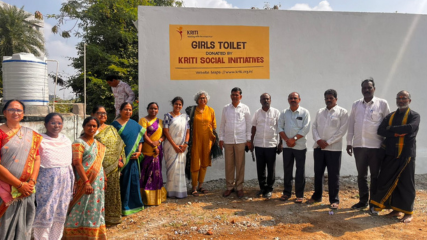
- Establishing and upgrading WASH facilities by improving drinking water systems, building and renovating bathrooms, repairing plumbing, and fixing sewage lines; constructing new toilet units where needed.
- Undertaking major structural repairs, including addressing water damage, repairing staircases, flooring, rooftops, and compound walls.
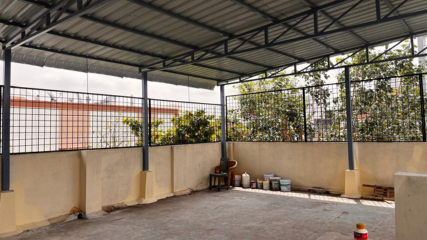
- Creating additional covered spaces that can be used for sports, extracurricular activities, or examinations.
- Providing essential learning resources, such as benches, teacher tables and chairs, computers, speakers, projectors, and other teaching-learning materials (TLM).
- Strengthening Teacher Capacity
- Teacher Training and Professional Development
- Exposure to diverse pedagogies and activity-based teaching
- Designing activities that nurture physical, social, and cognitive skills
- Computer literacy training at Kriti’s computer lab, enabling teachers to prepare digital content and collaborate effectively
- Training in gender sensitization to promote equitable and inclusive classrooms
- Orientation on child rights policies
- Academic Enrichment and Learning Culture
- Introducing activity-based learning, especially in math and science.
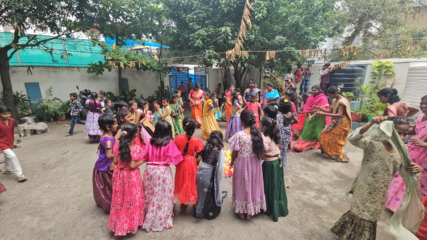
- Organizing and supporting science fairs, cultural programs, Annual Day events, and competitions.
- Implementing the Hippocampus library methodology to grade books by reading level and guide children as they progress to more advanced texts.
A safe, welcoming environment is essential for learning. Over the years, Kriti has upgraded infrastructure in more than 10 schools, consistently leading to higher enrollment once improvements are completed. Our interventions include:
Improving teacher-to-student ratios is fundamental to learning. While the mandated ratio is 1:45, many government schools fall short. Kriti currently employs 22 teachers across 11 schools, placing them in institutions identified by the Department of Education where both enrollment and teacher shortage are high.
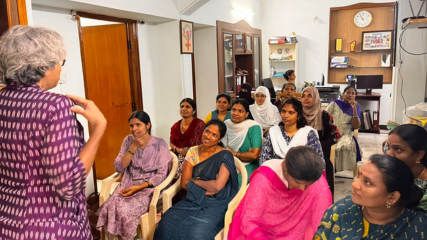
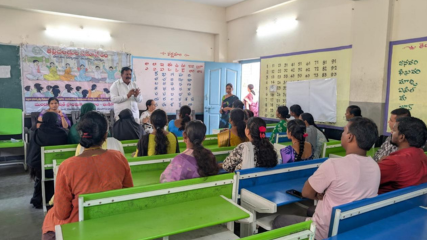
Each teacher receives over 20 days of training annually, including:
Kriti teachers play a significant role beyond classroom teaching:
Impact
- In 2025–26, the initiative impacts over 6,000 students, with average daily attendance of around 4,800.
- Students taught by Kriti-appointed teachers show notable improvement in academic performance compared to other classes.
- Schools with additional teachers see growth in enrollment, as improved ratios enhance teaching quality.
- The presence and training of Kriti teachers positively influence other teachers in the school, spreading best practices across the system.
Kriti also works closely with the Department of Education, raising concerns about staffing, school infrastructure, and teacher performance. As school enrollment rises and overall functioning improves, the Department has begun allocating more teachers—strengthening long-term sustainability. Kriti does need to support the schools where teachers are provided by the government or if Infrastructure improvements are taken care of by government funds.
Sustaining government schools through stronger systems, better support, and ongoing advocacy remains at the heart of our work.
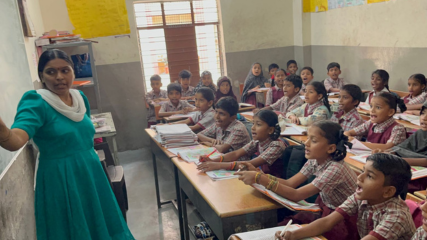
Classroom Moments at Shaikpet GHS
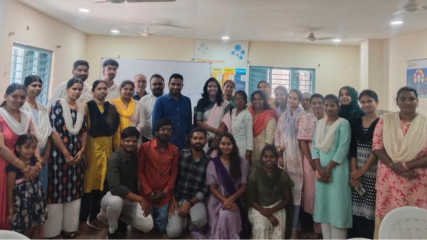
Shiksha Teacher Training
Constructing Girls’ Toilet at ZHPS Lingampally
Students engaging with hippocampus library methodology
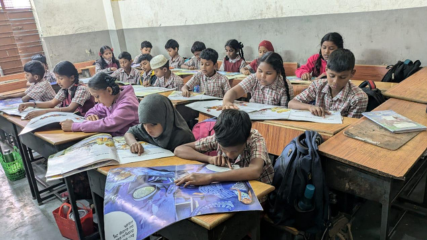
Learning Moments at NBT GHS
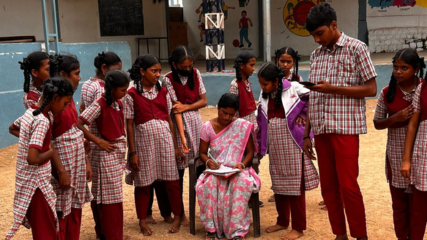
Parent–Teacher Meeting at MPPS Manikonda
Bathukamma Celebrations
Shiksha Teachers Undergoing IMPA Training
Constructed shed at Mangalhat